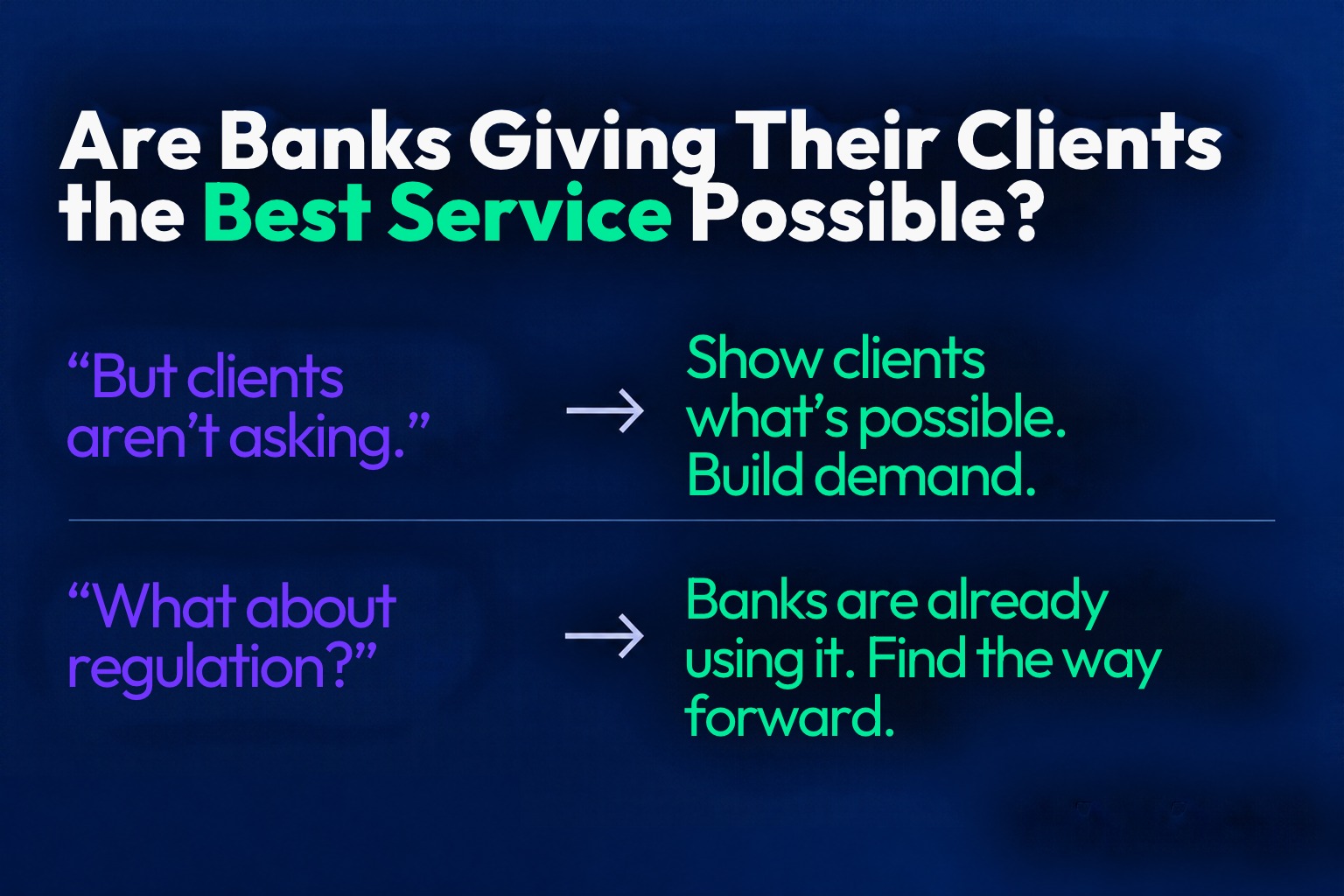
Banks sometimes explain their hesitation over digital trade finance in two ways: clients are not asking for it, and the legal or regulatory position still needs to be examined.
Both arguments came up in the discussion at the ITFA & Santander conference in Madrid, where I joined the panel Global Trade in a Fragmented World. My response starts with the responsibility banks have to their clients.
Clients should be shown services that could improve how they trade. When digital options are absent from the conversation, clients continue paying courier charges, waiting for documents and bearing the risk that originals may be lost. A lack of demand tells us little if clients have never been shown a workable alternative.
Responsibility means presenting a better option
Consider a trade transaction between two nearby countries. The buyer and seller do not yet have enough trust to transact without protection, so their banker proposes a letter of credit, or LC.
Now suppose the goods arrive quickly, but the documentary process takes two to three weeks. The importer may face storage charges while waiting for the documents needed to release the goods. The LC addresses a trust problem, yet the time required to operate it can make the arrangement commercially unattractive.
This was the example I raised at the panel. It makes the consequences of delay tangible: the client needs protection that works within the timescale of the shipment.
Banks have a responsibility to look for ways to provide that service. Introducing digital documents can reduce the time and risk associated with moving originals. Explaining that option should be part of serving the client, without waiting for the client to request a particular technology.
Regulation calls for a specific assessment
Legal questions deserve clear answers. But a general concern about regulation should lead to an assessment of a transaction, rather than indefinite postponement of digital adoption.
Legal recognition of electronic trade documents already exists in a number of jurisdictions. The UNCITRAL Model Law on Electronic Transferable Records, or MLETR, provides a framework for that recognition, and legislation based on or influenced by it has been adopted in multiple markets. Banks are already using digital trade document services.
The applicable law and requirements still need to be established for the documents and parties involved. The practical task is to identify what is permitted, what conditions must be met and how the bank can proceed. If a team lacks that knowledge, it should seek the expertise needed to answer those questions.
AI changes what the process can achieve
The panel also discussed AI, including the need for care in how it is used. One example from Natixis concerned faster credit application processing: shortening the work on each application could allow a team to handle more applications.
I took the discussion back to the short-distance trade example. What if AI could help us complete the LC process, end to end, in around an hour for a suitable transaction? That was a scenario to illustrate the opportunity, not a claim about a service available today.
Moving documents digitally would not, by itself, deliver that result. If a banker must still read and check every document manually, the workflow remains dependent on the time that examination takes. AI creates an opportunity to address the work between document receipt and the next action.
At WaveBL, we already help clients check document quality and generate documents using AI tools. Further capabilities are being developed now. Applying them responsibly requires clear controls over the checks performed, the exceptions raised and the decisions that require human judgment.
Connect the progress already under way
The wider ecosystem is progressing too. Interoperability is expanding connections between digital trade networks, giving participants access to more counterparties and markets.
WaveBL is working toward connecting document workflows with payment systems as a foundation for real-time trade. This is a development direction, with further work required to connect the steps of a transaction.
Banks do not need to wait for that entire future to arrive before improving the service they provide today. They can present digital options to clients, establish the legal route for suitable transactions and assess where AI can improve the workflow.
My message is that responsibility, regulatory understanding and AI belong in the same conversation. Together, they can help us build a trade finance process that serves the client’s transaction at the speed it needs.